Virginia Woolf’s Orlando adapted by Jules Scheele
The world seems gripped by a struggle: the forces of conservatism versus the forces of progress. Anti-movement versus movement. Perhaps we can take comfort in the fact that movement never stops, no matter whether we wish it to or not. Not the movement of mountains and tectonic plates, and certainly not the movement of human societies.
Change, existence, time are just some of the concepts that are dealt with in this adaptation of the classic Virginia Woolf novel Orlando by Jules Scheele.
Virginia Woolf challenged social norms throughout her life. A pioneering feminist whose essay ‘A Room of One’s Own’ remains one of the most influential works on the subject, Woolf was also a bold and experimental writer. She pioneered techniques like stream of consciousness narration and Orlando was experimental even by her standards. It is a book filled with fluidity: of time, gender and narrative itself.
This makes the book sound intensely serious, yet Woolf approached it with a playful spirit. The critic Terry Eagleton described Orlando as “an exuberant literary sport at the expense of the stony-faced scholars.” It was, after all, a work dedicated to Woolf’s friend and lover Vita Sackville-West.
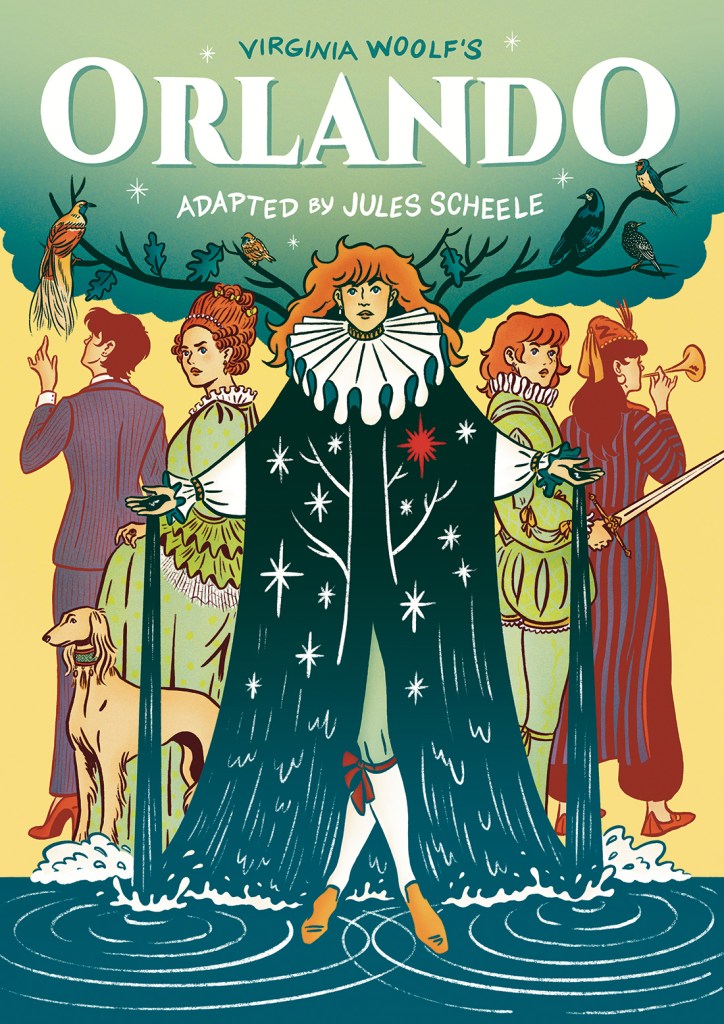
Orlando is a fantastical novel which blends autobiography with fantasy. It tells the story of a young English noble, who lives an extraordinarily long time, from the Elizabethan era onwards – eternal but ever changing like an ambiguine Dr Who. Throughout their life Orlando shows a restless struggle against the norms and expectations of society. They change gender and experience both the freedoms and restrictions of life as a man and as a woman.
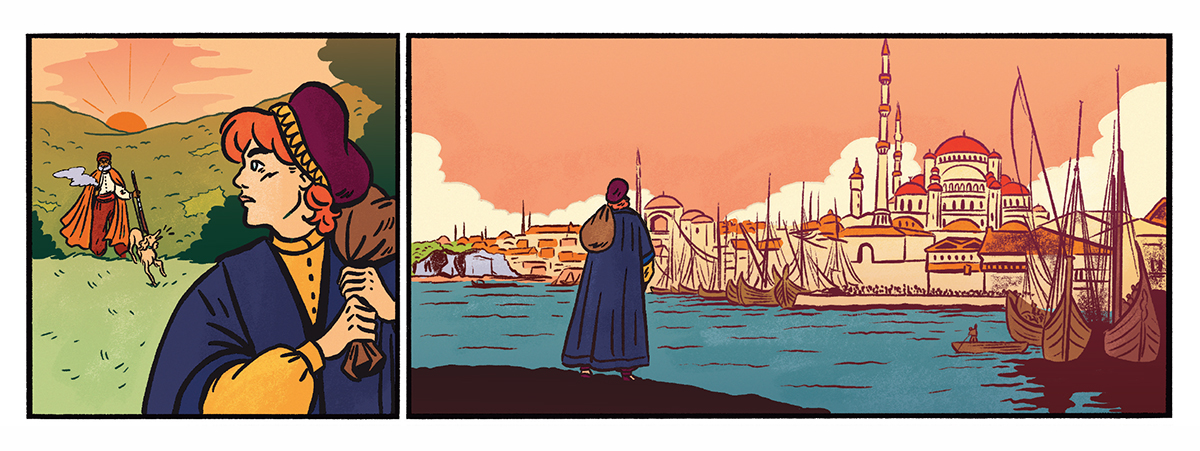
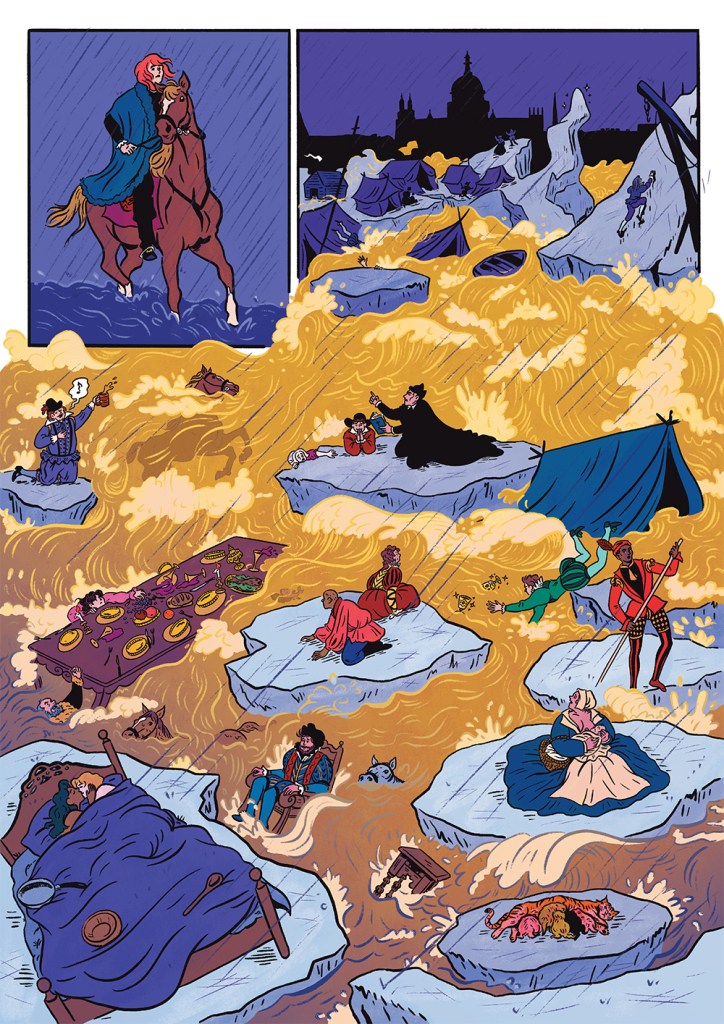
Orlando is an intensely theatrical book, and this spirit lies at the centre of Scheele’s adaptation. Scheele revels in illustrating the extravagant fashions of the Elizabethan age, the pageantry of the Frost Fair upon the frozen Thames, and the splendours of Istanbul.
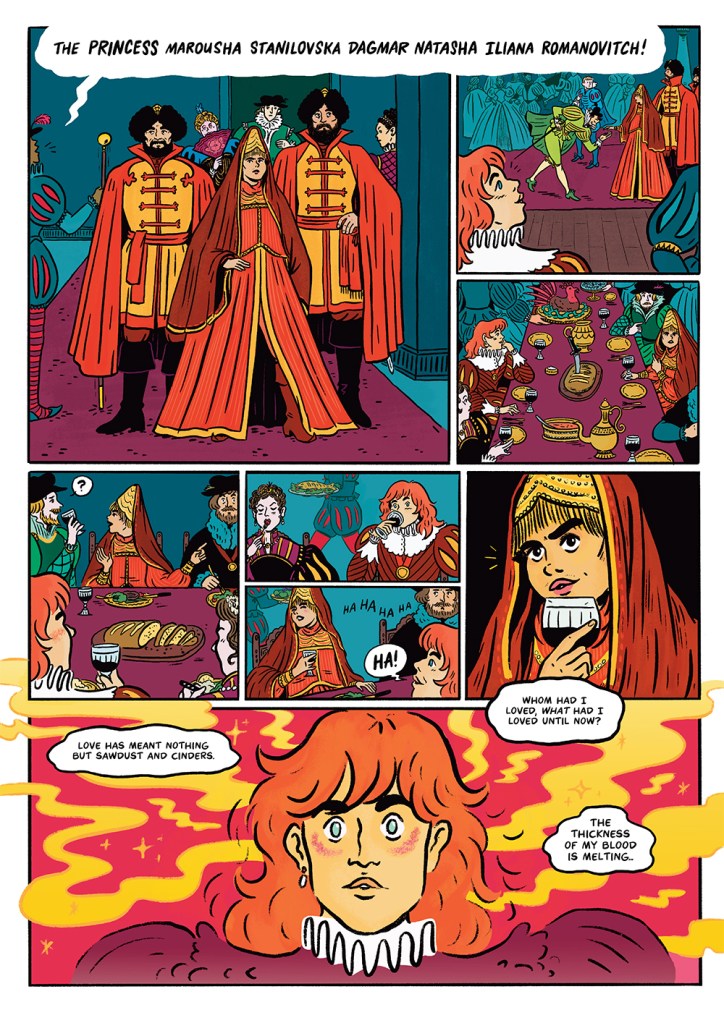
I love how Scheele brings these locations to life in marvellous splash pages filled with colour and exotic life. Bright and burning like Orlando’s passion for life or Woolf’s love for Vita Sackville-West. Birds swoop and glide through the panels, guiding the reader forward like symbols of instinct, freedom and nature itself.
Colour is central to this historical procession and the bright, often primary colours remind me of Prince Valiant by Hal Foster. Vivid blues and yellows, deep blacks of night all slashed through with the bright red of Orlando’s hair.
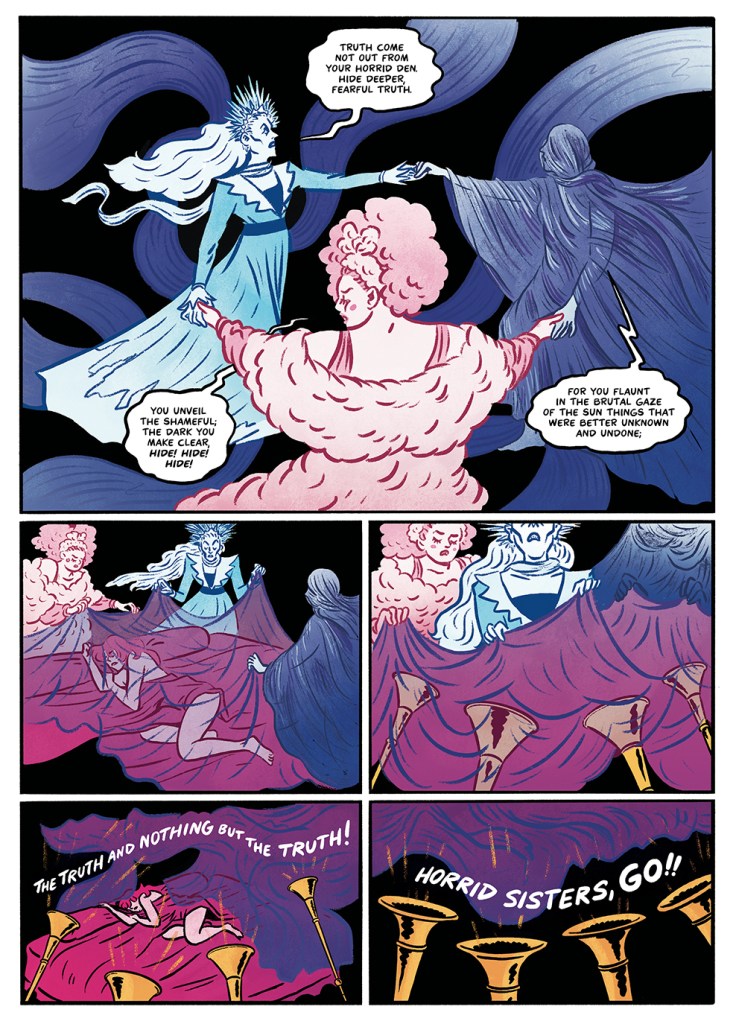
Scheele depicts Orlando as a sensuous, androgynous figure — a clean-limbed youth who remains vibrant while others fade and die, pursuing personal freedom despite its cost.
Scheele captures the spirit of Woolf’s novel remarkably well. This adaptation deals with subjects that remain at the centre of legal, political and ideological conflict, yet it never loses the energy, warmth and sense of play that made the original so radical. It is bright, romantic and alive with feeling. In dark times, this adaptation feels like a beacon. I cannot imagine a better way to bring Orlando to graphic life than this stunning interpretation.
Orlando is published by Avery Hill and is available from 18th June – those who backed the Kickstarter (like myself) should see their copies before that! You can find more from Jules Scheele at their website.

